
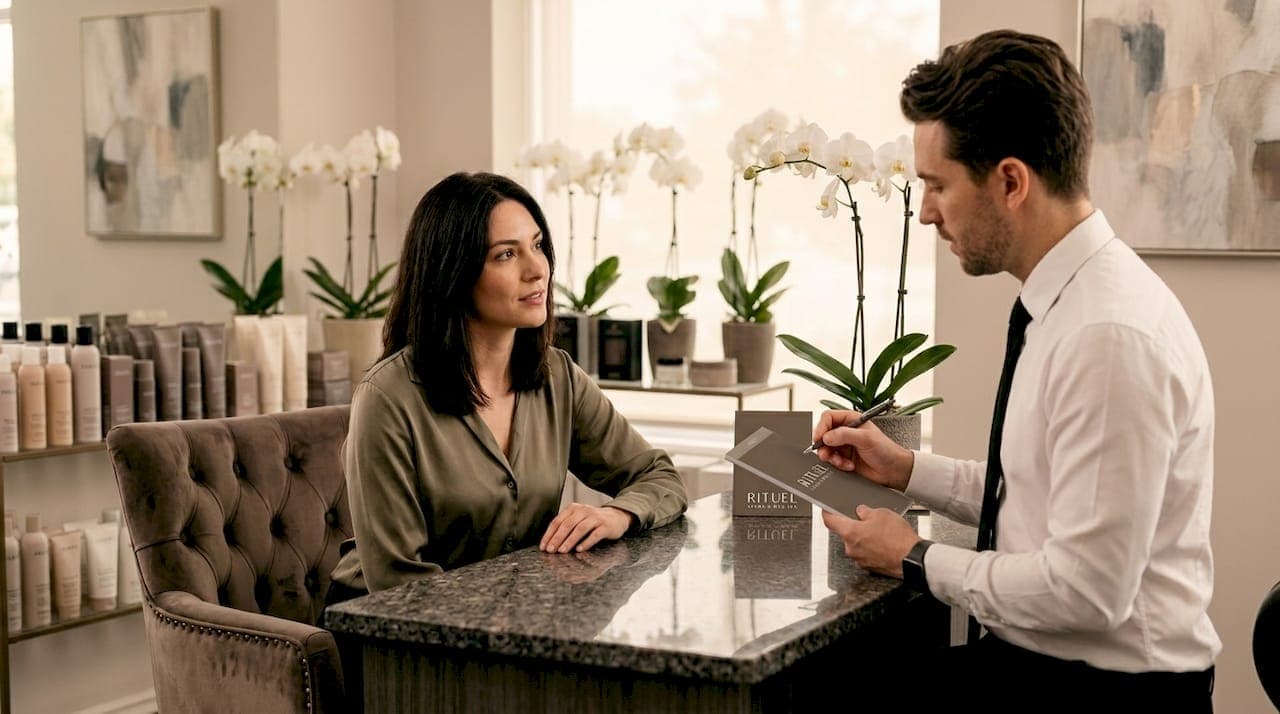
Most people assume luxury salons simply charge more for the same haircut. That assumption misses almost everything that actually makes how luxury salon experience differs from a standard appointment worth understanding. The real gap has nothing to do with price tags on a menu board. It lives in the depth of consultation you receive before a single scissor touches your hair, the environment engineered to make you feel completely unhurried, and the technical expertise shaped specifically around your hair texture, your lifestyle, and your local climate. What follows breaks all of that down clearly.
Table of Contents
- Key Takeaways
- How luxury salon experience differs from day one
- The environment is not decoration. It is strategy.
- Signature treatments that cannot be replicated at home
- Technical expertise and local adaptation
- How the guest journey is built from the inside out
- My take on what clients actually remember
- Experience the Rituel difference in Phoenix
- FAQ
Key Takeaways
| Point | Details |
|---|---|
| Personalization starts at assessment | Luxury salons begin with a technical audit of scalp health and hair structure before any service. |
| Ambiance is operationally designed | Spatial planning controls guest flow and prevents crowding, preserving calm and privacy. |
| Treatments go beyond the chair | Signature rituals incorporate sensory elements and premium products unavailable at standard salons. |
| Expertise is locally adapted | Top stylists customize global techniques to suit local hair textures and environmental factors. |
| Guest journey is intentionally crafted | Every touchpoint from arrival to checkout is paced and sequenced to protect the client's comfort. |
How luxury salon experience differs from day one
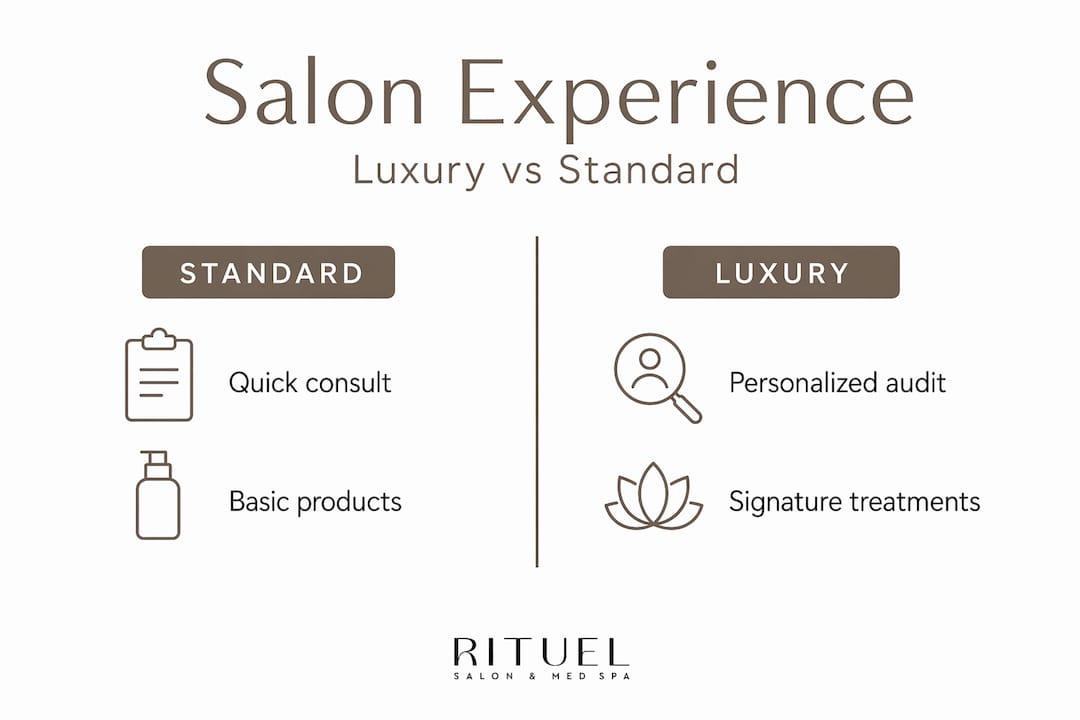
The industry term for what separates top-tier salons from the rest is client experience architecture. It refers to the intentional design of every interaction a client has, from the moment they book through the moment they leave. Understanding this framework is the fastest way to recognize true quality when you encounter it.
The most immediate difference is the consultation. In a standard salon, the consultation is often a brief exchange while the stylist is already reaching for a brush. In a luxury setting, the first fifteen minutes function as a technical audit that evaluates porosity, scalp condition, and hair structure before any decisions are made. That assessment becomes a roadmap for everything that follows.
This approach changes the outcome in measurable ways. When a stylist understands your hair's porosity level, they choose the right developer strength. When they assess scalp health, they know whether a treatment will absorb or sit on the surface. None of that happens in a 90-second intake conversation.
Here is what a structured luxury consultation typically covers:
- Scalp health evaluation: Checking for dryness, buildup, or sensitivity that affects product absorption
- Hair porosity and texture analysis: Determining how your hair takes and holds color or conditioning treatments
- Lifestyle mapping: Understanding how you style at home, your workout schedule, and your maintenance preferences
- Previous chemical history: Reviewing past color, relaxers, or heat damage that shapes the treatment plan
Pro Tip: Before your first visit to any salon that markets itself as luxury, jot down your past chemical services and styling routine. A stylist who asks about those details within the first few minutes is showing you exactly how seriously they take the work.
Celebrity hairstylist Yianni Tsapatori describes luxury salon differentiation as experience-led, built on consistency, thoughtful consultation, and managing how a client feels from the moment they arrive to the moment they walk out. That framing matters because it shifts the standard from "good hair" to "good experience that produces great hair."
The environment is not decoration. It is strategy.
Walk into a high-end salon and you notice the calm before you notice anything else. That is not accidental. The design, lighting, sound levels, and spatial layout are all chosen to produce a specific psychological effect. Quiet luxury design, the term professionals use for restrained, tactile, sensory-rich environments, prioritizes how a space feels over how much it visually impresses.
"The sense of arrival matters as much as the service itself. A client who walks in rushed and overstimulated is not ready to relax into the experience you have prepared for them." — Yianni Tsapatori
Spatial planning plays a larger role in differences in salon quality than most clients realize. Luxury salons are deliberately not packed. The high-end hospitality industry uses a similar principle: treatment room ratios of approximately one room for every 25 to 35 guests exist specifically to prevent overcrowding and protect the sense of exclusivity. Luxury salons apply the same logic to their styling floors.
Compare the two environments side by side:
| Feature | Standard salon | Luxury salon |
|---|---|---|
| Chair spacing | Close, efficient use of floor space | Generous spacing for privacy |
| Lighting | Bright, even, fluorescent | Warm, layered, adjustable |
| Sound | Background music, open conversation | Curated acoustics, lower volume |
| VIP areas | Not typically available | Dedicated private or semi-private zones |
| Waiting area | Functional seating | Designed lounges with refreshments |
| Appointment pacing | Tightly back-to-back | Scheduled gaps to preserve calm |
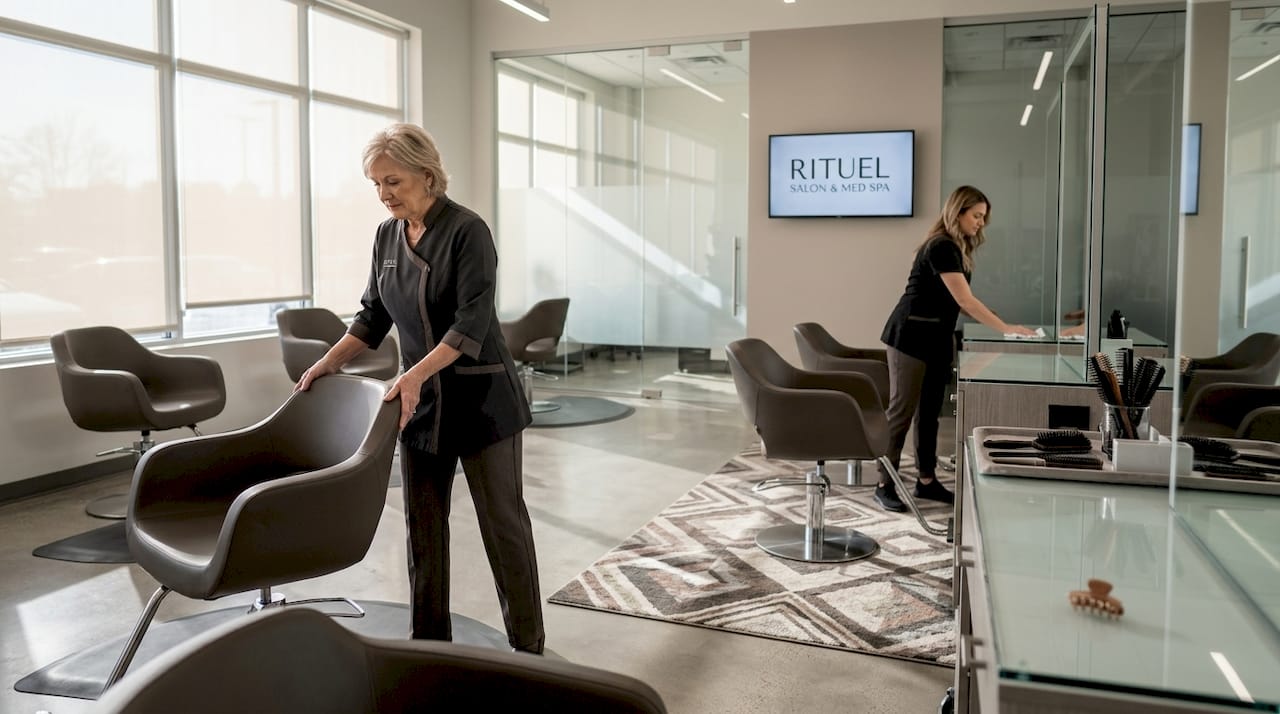
Exclusive salon features like VIP floors are not about status. They exist to give clients an uninterrupted, fully focused experience. March14 in Dubai, a quietly luxurious craft-led space, specifically uses warm interiors and controlled guest flow to distinguish itself from salons that simply offer more services.
Signature treatments that cannot be replicated at home
The gap in high-end beauty treatments is widest when you look at what is actually on the service menu. Luxury salons do not just offer better versions of standard services. They offer entirely different categories of experience.
Consider Shiseido Professional's Sublimic Timetic Timeless Ritual. This 45-minute Japanese-inspired treatment begins with a cup of hot tea, moves through a calming sensory-focused shampoo sequence, and includes salon-exclusive mask steps that significantly deepen conditioning. Priced from $220, it is designed around the principle that beauty treatments and hospitality rituals are not separate things.
That philosophy has a name. Omotenashi is the Japanese concept of anticipatory hospitality, where service providers anticipate needs before the client has to express them. The most respected luxury salons have codified this into their training and protocols, teaching staff not just technique but attentiveness.
What makes exclusive salon features like these worth their price point:
- Salon-exclusive formulations: Products blended or applied in steps that are not available for retail purchase, meaning the result genuinely cannot be replicated at home
- Advanced conditioning protocols: Multi-step mask and sealing sequences that respond to hair analyzed at the start of the appointment
- Detoxification treatments: Scalp-level clearing services that address buildup from hard water, dry air, and product residue, a real issue in desert climates like Phoenix
- Sensory integration: The combination of scent, temperature, touch pressure, and timing designed to shift the client into a genuinely relaxed state during the service
This is where premium salon experience stops being a marketing term and becomes a technical description. The products cost more because the formulation standards are higher. The treatment time is longer because rushing undermines the result. The price reflects both.
Technical expertise and local adaptation
There is a version of luxury that looks impressive globally but performs poorly in your specific zip code. True premium hair care accounts for this. Adapting international techniques to local client realities is what separates technically skilled stylists from truly exceptional ones.
Phoenix is a useful example. The desert climate creates frizz, color fade, and scalp sensitivity patterns that simply do not match what a European training program was designed for. A stylist trained to handle Arizona humidity levels, intense UV exposure, and mineral-heavy water knows exactly how to adjust a balayage formula or blowout technique to hold through the week, not just the day of.
Pro Tip: When evaluating a luxury salon, ask your stylist directly how they account for your local climate in their technique. The answer tells you more about their expertise level than any credential on the wall.
| Technique element | Standard application | Locally adapted approach |
|---|---|---|
| Balayage developer strength | Based on hair type alone | Adjusted for UV exposure and heat |
| Blowout technique | Standard round brush method | Modified for humidity or dry air retention |
| Color formulation | Brand recommendations | Customized for mineral water interaction |
| Conditioning treatment | One protocol for all | Selected based on scalp analysis and climate |
| Product recommendations | Retail upsell | Matched to your actual environment and routine |
Ongoing research and development also distinguishes luxury versus standard salons at the operational level. Top-tier salons send their stylists to training outside the standard brand education calendar, stay current on ingredient science, and actually refine their house protocols rather than using the same procedures they used five years ago.
How the guest journey is built from the inside out
Behind the scenes of a luxury salon, there are systems most clients never see. Appointment pacing is one of them. Standard salons book back-to-back at maximum capacity. Luxury salons build gaps into the schedule, not to waste time, but to allow each client to feel like they are the only person in the room.
Spatial segmentation is another. Salons that operationalize discretion and continuity separate their zones by service type and client stage. A client waiting for color to process is not placed next to someone getting a loud blow-dry. A VIP client requesting privacy is moved to a dedicated floor. Every step is sequenced with the guest's sensory experience in mind.
How luxury salons typically control the guest journey:
- Pre-arrival communication: Confirmation details that set expectations, including what to wear, what to avoid, and what to share at intake
- Intentional greeting: A structured welcome that begins the consultation immediately, without rushing the client to a chair
- Mid-service check-ins: Timed touchpoints where the stylist confirms comfort, temperature, timing, and preferences
- Processing zone management: Separate seating for clients in active treatment to preserve the calm of the styling floor
- Exit sequencing: A close that includes product education, home care guidance, and a follow-up scheduling offer without pressure
The Four Seasons Hotel Madrid's spa captures the same principle at scale. Their 1,450 square meter facility across four levels with eight treatment rooms was designed specifically around personalization and controlled pacing, demonstrating that the most respected luxury environments share the same operational DNA regardless of category.
My take on what clients actually remember
What I have observed again and again is that clients rarely leave a luxury salon talking about the specific product used in their treatment. They talk about how they felt. The stylist remembered their name from the last visit. Nobody rushed them. The space was quiet enough to actually decompress. Someone offered them a drink without being asked.
That last part matters more than the industry acknowledges. Omotenashi principles in hospitality training teach staff to anticipate rather than react. Most salons train for the reaction. They address what clients ask for. Luxury salons train staff to notice what has not been said yet.
In my experience, what clients overlook until they experience it firsthand is the compounding effect of consistency. One good appointment can happen anywhere. A luxury salon produces the same quality, the same warmth, and the same attention on a Tuesday afternoon with a new stylist as it does on a Saturday morning with the owner. That kind of reliability is the hardest thing to build and the clearest sign you are in a place that takes the work seriously.
— Victor
Experience the Rituel difference in Phoenix
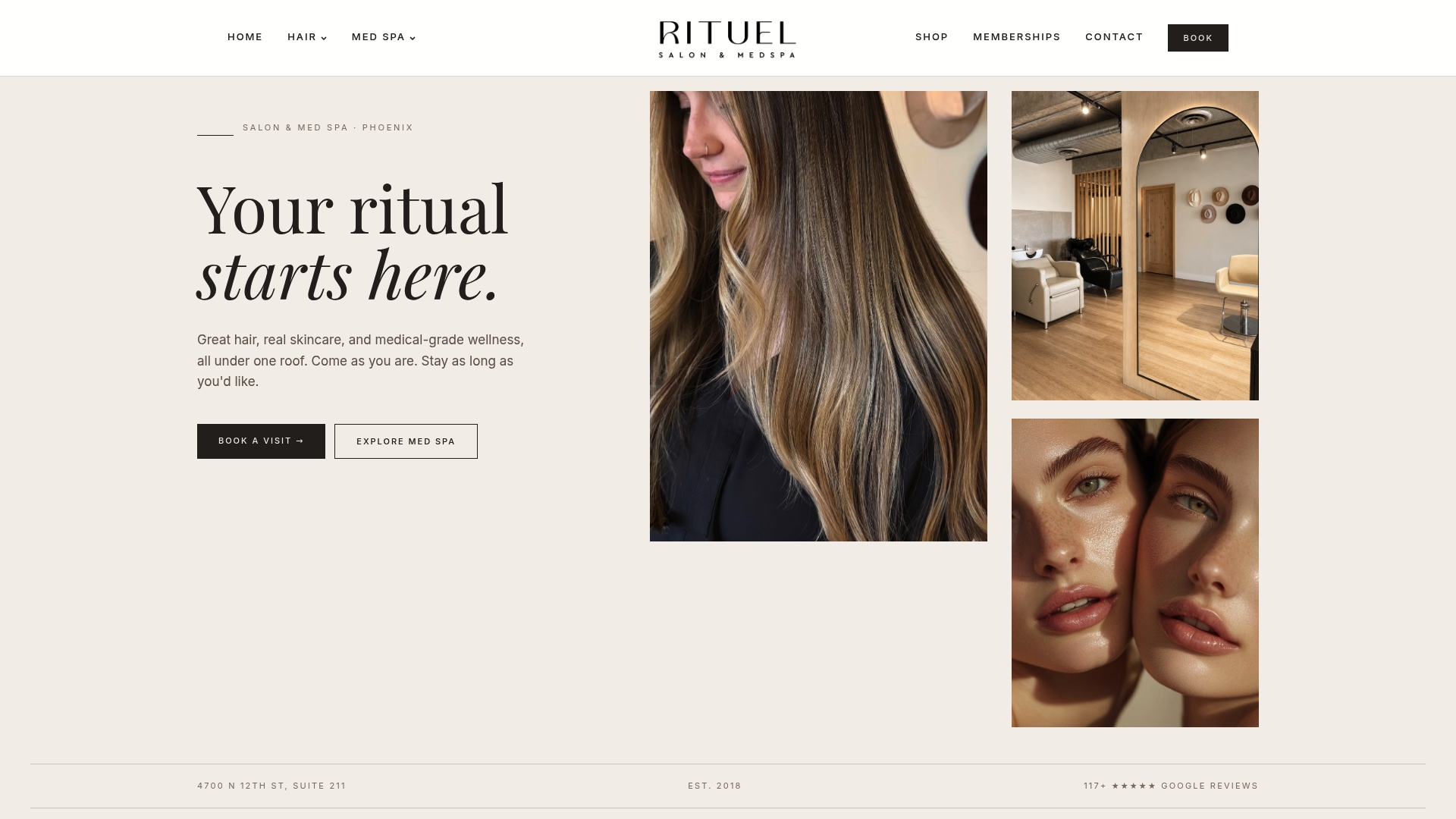
Rituel Salon & Med Spa in Phoenix was designed around exactly the principles this article describes. From your first visit, you receive a thorough consultation before any service begins. The environment is calm, unhurried, and intentionally private. The stylists are trained to account for Phoenix's specific climate conditions in every balayage and hair color appointment they take.
Beyond hair, Rituel's med spa services bring the same philosophy to skin and wellness. Whether you are exploring microneedling, a luxury facial, or Botox, every treatment is preceded by an honest conversation about your goals and your baseline. You get a plan, not a package. Visit Rituel Salon & Med Spa to explore the full service menu and book your consultation at 4700 N 12th St, Suite 211 in Phoenix's central corridor.
FAQ
What makes a salon truly "luxury" vs. just expensive?
A luxury salon differentiates itself through depth of consultation, technical expertise, controlled ambiance, and exclusive treatments, not price alone. The technical audit approach and paced guest journey are the clearest operational markers.
How do luxury salons personalize their services?
Luxury salons begin with a structured assessment of scalp health, hair porosity, and lifestyle factors, then build a custom treatment plan rather than applying a standard service menu. Consultations on expert extension selection follow the same principle.
Are premium beauty treatments at a luxury salon worth the higher cost?
Yes, when the price reflects exclusive formulations, extended appointment times, and locally adapted techniques. Signature treatments like Japanese-inspired rituals include salon-exclusive steps that genuinely cannot be reproduced at home.
How do I choose a luxury salon that is right for me?
Look for salons that lead with a thorough consultation, show evidence of ongoing stylist education, and adapt their techniques to your specific hair type and local environment. Ask directly how they account for your climate and lifestyle in their approach.
What role does ambiance play in the luxury salon experience?
Ambiance in a luxury salon is operationally structured, not just decorative. Spatial segmentation, appointment pacing, and sensory design work together to make the environment feel private and calm, mirroring the approach used in top-tier hotel spas.