

A salon color consultation is a one-on-one planning session where your stylist evaluates your hair's condition, history, and goals before applying a single drop of color. The industry term for this process is a "pre-color consultation" or "color analysis appointment," and it covers everything from porosity testing to maintenance planning. Skipping it is the single most common reason clients leave a salon disappointed. This guide breaks down the salon color consultation process step by step, so you walk in prepared and walk out with exactly what you envisioned.
Salon color consultation explained: what actually happens
A color consultation is a structured assessment covering your hair and scalp condition, color goals, maintenance expectations, aftercare needs, and sometimes patch testing. It is not a casual chat. Every detail your stylist gathers directly shapes the formula, timing, and technique they will use on your hair.
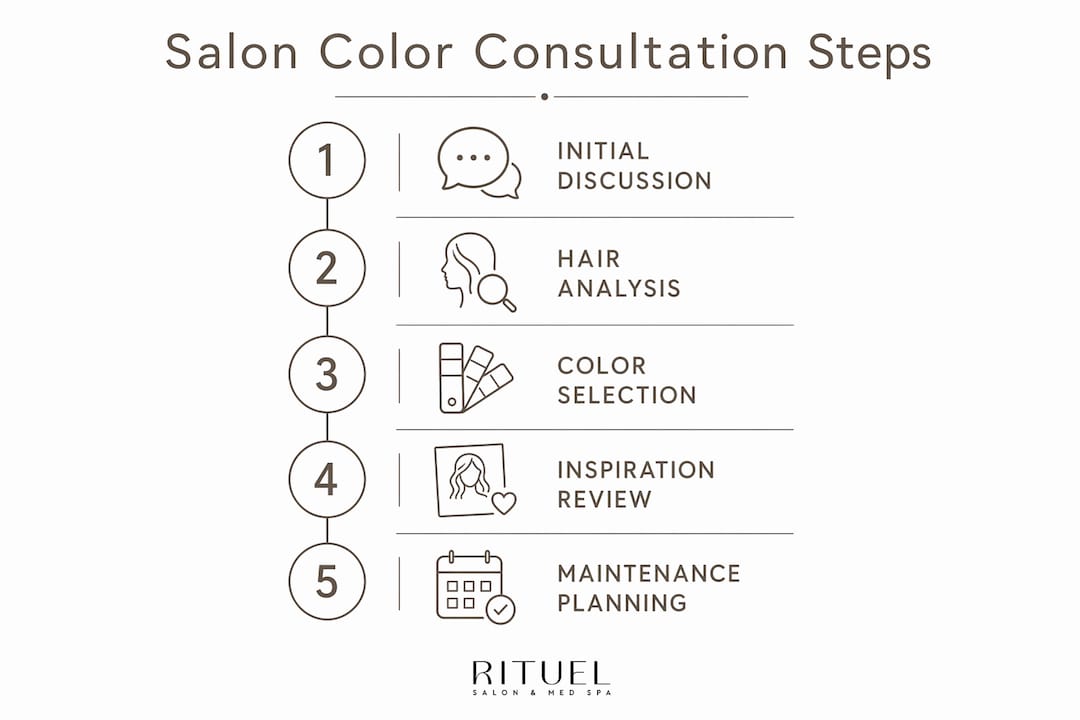
Here is what the process looks like from start to finish:
- Goal discussion. Your stylist asks what you want to achieve, whether that is a subtle refresh, a dramatic change, or a color correction. This is where you share inspiration photos and describe the result you have in mind.
- Hair history review. Your stylist asks about previous color services, chemical treatments, heat damage, and any at-home coloring you have done. This history determines what the hair can safely handle.
- Physical assessment. Your stylist examines your hair under different lighting conditions and holds color swatches against your roots and inspiration photos to find the most accurate shade match. This step is where many clients are surprised by how technical the process gets.
- Porosity check. Your stylist performs a strand test or visual assessment to determine how your hair will absorb and retain color. More on this in the next section.
- Realistic outcome discussion. Your stylist explains what is achievable in one session versus multiple sessions, especially for dramatic changes like going from dark brown to platinum blonde.
- Maintenance and aftercare planning. Your stylist outlines how often you will need touch-ups, what products to use at home, and what to expect as the color grows out.
- Patch test scheduling. If required, a patch test must be completed 48 hours before your color appointment to check for allergic reactions to color ingredients. This often means booking a separate visit.
A typical consultation takes 10 to 20 minutes, though complex color changes or corrections can extend that time. Think of it as the blueprint session. The more thorough it is, the fewer surprises you face in the chair.
Pro Tip: Bring three to five inspiration photos taken in different lighting conditions, including natural daylight and indoor light. Color looks dramatically different depending on the light source, and multiple photos give your stylist a far more accurate picture of your actual goal.

How does hair porosity affect your color results?
Hair porosity is the measure of how well your hair's cuticle layer absorbs and retains moisture and color pigment. It is one of the most important factors your stylist considers during the color consultation process, yet most clients have never heard of it before sitting in the chair.
There are three porosity levels, and each one behaves differently with color:
- Low porosity: The cuticle is tightly closed. Color takes longer to penetrate, processing times need to be extended, and the result can appear uneven if the formula is not adjusted. On the upside, color tends to fade more slowly once it does set.
- Medium porosity: The cuticle is slightly open and accepts color evenly. This is the ideal baseline. Color processes predictably, fades gradually, and holds tone well between appointments.
- High porosity: The cuticle is raised or damaged, often from heat styling, bleaching, or chemical treatments. Color absorbs very quickly but fades faster and risks brassiness, especially in lighter shades. Stylists often use bond-building treatments like Olaplex alongside color to reduce further damage.
Assessing porosity and adjusting formulas accordingly is the difference between color that looks vibrant for six weeks and color that turns brassy in two. It is not optional. It is the foundation of a good color result.
Your stylist identifies your porosity level through a simple strand test, a visual inspection of the cuticle under magnification, or by asking about your hair history. If you color at home frequently or use high heat daily, assume your porosity is elevated and mention it during your consultation. Preparing your hair with a clarifying treatment before your appointment can also help normalize porosity and improve color evenness.
How to prepare for your salon color consultation
Preparation is what separates a productive consultation from a frustrating one. Clients who arrive organized give their stylist the information needed to build a realistic, personalized color plan. Those who arrive unprepared often leave with a vague plan and unmet expectations.
Here is what to bring and do before your appointment:
- Bring multiple inspiration photos. Include images taken in natural light, indoor light, and different seasons if possible. Photos and product lists prevent the most common source of miscommunication between clients and stylists.
- Write down your product history. List every product you use regularly, including shampoos, conditioners, dry shampoos, and any treatments. Certain ingredients, like silicones and heavy oils, can block color penetration.
- Note your recent treatments. Keratin treatments, relaxers, and bleach all affect how your hair responds to new color. Your stylist needs this information to avoid damage.
- Bring a photo of your natural hair color if you have been coloring for years and cannot remember your base. This helps your stylist understand the starting point.
- Be honest about your lifestyle. How often do you wash your hair? Do you swim regularly? How much time are you willing to spend on maintenance? Open conversation about lifestyle and budget is what makes a maintenance plan realistic rather than aspirational.
- Clarify your hair 24 to 48 hours before your appointment. Using a clarifying shampoo removes product buildup and mineral deposits, which improves color penetration and leads to more even, longer-lasting results.
Pro Tip: Take a photo of your hair in natural light the morning before your consultation. This gives your stylist a real-time reference for your current condition, separate from any older photos you bring.
For clients considering a significant change, it also helps to browse bold transformation examples beforehand so you arrive with a clear sense of what dramatic really means and whether it aligns with your maintenance tolerance.
What should you expect for maintenance after coloring?
The consultation does not end when your stylist picks a formula. A significant portion of the color consultation process is dedicated to mapping out what happens after you leave the salon. This is the part most clients underestimate, and it directly affects how satisfied they are with their color over time.
Your stylist will set realistic targets based on your hair's current condition. If your hair is compromised from previous bleaching or heat damage, a single session to achieve a major color change is rarely safe or advisable. Big color changes involve staged processes that protect hair integrity, and your stylist will propose a multi-session plan if a single appointment is not appropriate.
| Color goal | Typical sessions needed | Maintenance schedule |
|---|---|---|
| Single-process all-over color | 1 session | Root touch-up every 4 to 6 weeks |
| Balayage or highlights | 1 to 2 sessions | Gloss or toner refresh every 4 to 6 weeks |
| Color correction (e.g., fixing box dye) | 2 to 4+ sessions | Varies; bond treatments often required |
| Dark to platinum transformation | 3 to 6+ sessions | Toner every 4 weeks; purple shampoo weekly |
Root touch-ups every 4 to 6 weeks and gloss or toner refreshes on a similar schedule are the standard cadence for maintaining vibrant color. Skipping these appointments does not just affect appearance. It makes the next correction more complex and more expensive.
Your stylist will also recommend specific home-care products, typically a color-safe shampoo, a hydrating conditioner, and a weekly gloss or toning treatment. For Phoenix clients especially, UV exposure and hard water accelerate fading, making color maintenance between visits a real priority rather than optional upkeep.
Common misconceptions about the consultation process
Many clients walk into a color consultation with assumptions that create friction before the appointment even begins. Clearing these up leads to better communication and better results.
- "The consultation is just small talk." It is not. The assessment your stylist conducts during those 10 to 20 minutes determines the entire color plan. Treating it casually means your stylist has less information to work with.
- "My inspiration photo is exactly what I'll get." Photos are a reference, not a guarantee. Lighting, filters, hair texture, and your starting color all affect the final result. A skilled stylist uses the photo as a direction, not a blueprint.
- "One session is always enough." For subtle changes, yes. For anything involving significant lightening or color correction, one session is rarely sufficient and pushing for it in a single appointment risks serious damage.
- "Skipping the consultation saves time." Skipping it increases the risk of dissatisfaction, damage, and costly corrections. The consultation is the step that prevents problems, not a formality that precedes them.
- "The stylist will figure out maintenance on their own." Your stylist can only build a realistic maintenance plan if you are honest about your washing frequency, heat usage, and budget. Withholding this information leads to a plan that looks good on paper but fails in practice.
Key takeaways
A thorough salon color consultation is the single most important factor in achieving color results that match your goals and last between appointments.
| Point | Details |
|---|---|
| Consultation covers more than color choice | Stylists assess porosity, hair history, and lifestyle to build a complete color plan. |
| Porosity determines color behavior | Low, medium, and high porosity each require different formulas and processing times. |
| Preparation improves outcomes | Bring photos, product lists, and clarify hair 24 to 48 hours before your appointment. |
| Maintenance planning starts at consultation | Root touch-ups every 4 to 6 weeks and toner refreshes keep color vibrant longer. |
| Realistic expectations reduce disappointment | Dramatic changes often require multiple sessions; your stylist will map out the timeline. |
What I've learned from watching clients skip the consultation
I have seen the same pattern repeat itself more times than I can count. A client books a color appointment without a proper consultation, arrives with a single photo pulled from Instagram, and expects the result in one session. The stylist does their best with limited information, and the client leaves either underwhelmed or, worse, with damaged hair that now requires a correction.
The consultation is not a formality. It is where the real work begins. What clients often overlook is that the questions a stylist asks during those 10 to 20 minutes are diagnostic, not conversational. When your stylist asks how often you wash your hair or whether you swim, they are calculating how quickly your color will fade and whether the formula needs to be adjusted for longevity.
The other thing clients consistently underestimate is the patch test. Scheduling a patch test 48 hours ahead feels like an inconvenience until you understand that delayed allergic reactions to color ingredients can be serious. It is a non-negotiable step for first-time color clients or anyone switching to a new formula.
My honest advice: come to your consultation the way you would come to a doctor's appointment. Bring your history, be specific about your goals, and be honest about what you are actually willing to do at home. The more your stylist knows, the better your color will be.
— Victor
Book your color consultation at Rituel Salon & Med Spa
If you are ready to move from wondering to knowing exactly what your hair can achieve, Rituel Salon & Med Spa in Phoenix offers thorough, personalized color consultations with experienced stylists who specialize in balayage, highlights, and color correction.
Every consultation at Rituel starts with a real assessment of your hair's condition, your color goals, and a maintenance plan built around your actual lifestyle. Whether you are exploring balayage for the first time or planning a full color transformation, the team at Rituel builds a plan that is honest, achievable, and designed to last. Visit the hair color services page to learn more or book your appointment at 4700 N 12th St, Suite 211, Phoenix, AZ.
FAQ
What is a salon color consultation?
A salon color consultation is a pre-color planning session where your stylist assesses your hair condition, reviews your color history, and recommends the best approach to achieve your goals. It typically takes 10 to 20 minutes and may include a patch test requirement.
How should I prepare for a hair color consultation?
Bring multiple inspiration photos in different lighting, write down the products you use regularly, and use a clarifying shampoo 24 to 48 hours before your appointment. Being honest about your lifestyle and maintenance budget helps your stylist build a realistic plan.
Why does hair porosity matter for color results?
Hair porosity determines how quickly your hair absorbs color and how long it retains it. High porosity hair absorbs color fast but fades quickly and risks brassiness, while low porosity hair resists uptake and requires longer processing times.
How often do I need color maintenance after my appointment?
Most color services require root touch-ups every 4 to 6 weeks and gloss or toner refreshes on a similar schedule to keep color vibrant and prevent fading or brassiness.
Can I achieve a dramatic color change in one session?
Not always. Major changes like going from dark brown to platinum blonde typically require multiple sessions to protect hair integrity. Your stylist will outline a staged plan during the consultation based on your hair's current condition.