
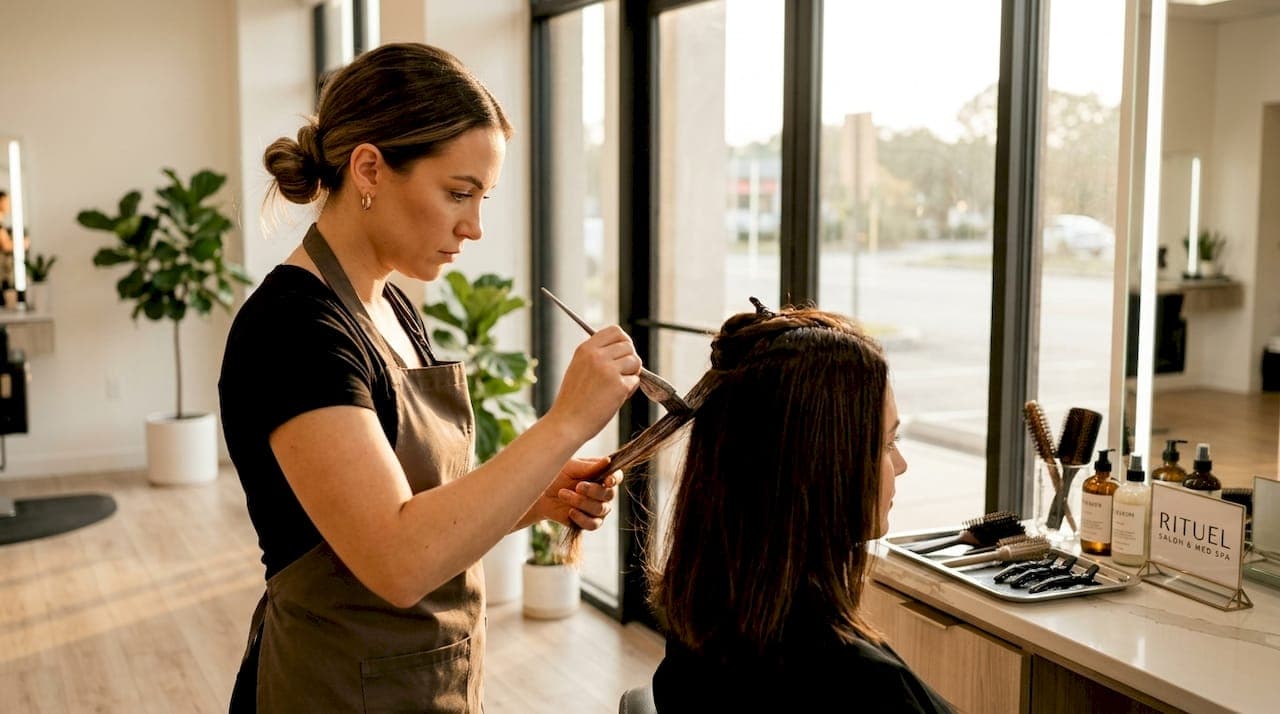
A Brazilian blowout is defined as a semi-permanent, keratin-based hair smoothing treatment that coats each strand with a protective layer to reduce frizz, enhance shine, and improve overall manageability. The treatment lasts approximately three months and works on most hair types, from wavy to tightly coiled. Unlike permanent straightening, it gradually fades without leaving a harsh regrowth line. The formula draws on natural Brazilian ingredients like camu camu and açai berry alongside keratin protein, making it one of the most popular professional smoothing options available today. If you have been wondering whether this treatment is right for your hair, this guide covers everything you need to know.
What is a Brazilian blowout, and how does it work?
The Brazilian blowout treatment works by applying a liquid keratin formula directly to clean hair, then sealing it with high heat to form a protective layer around each strand. That layer is what delivers the smoothing effect. The process is methodical, and skipping any step reduces the final result significantly.
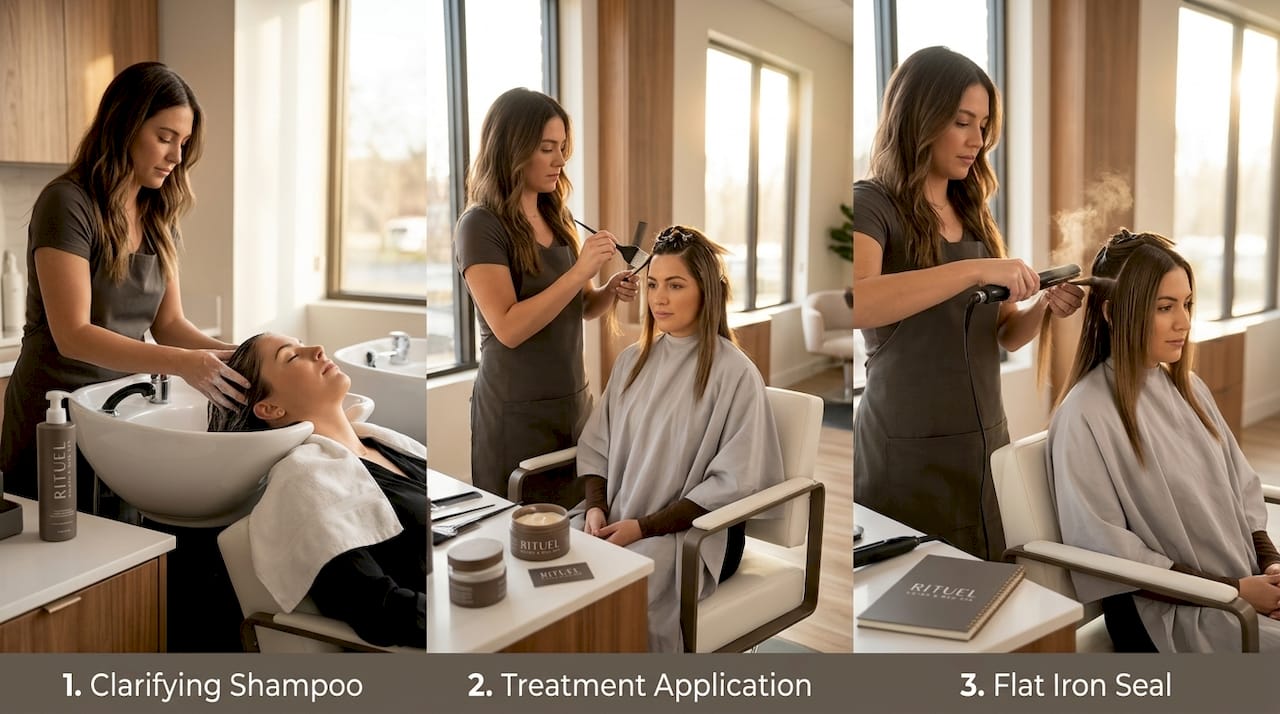
Here is what a professional application looks like from start to finish:
- Pre-treatment shampoo. Your stylist shampoos your hair three to four times to strip away product buildup, oils, and residue. This is not excessive. A clean surface is what allows the keratin formula to bond evenly to each strand.
- Solution application. The keratin formula is applied from root to tip while hair is still damp. Your stylist works in sections to make sure every strand is coated.
- Blow-dry. Hair is blow-dried to begin setting the formula before the heat sealing step.
- Flat iron sealing. A flat iron set to approximately 450°F seals the keratin into the hair shaft. This is the step that activates the bonding process and is also the source of the distinctive odor some clients notice during treatment.
- Rinse and condition. Hair is rinsed and treated with a deep conditioner to restore moisture after the heat exposure.
- Final blow-dry. The stylist finishes with a blow-dry to reveal the smooth, polished result.
The entire appointment typically runs between 90 minutes and two hours depending on hair length and thickness. One important detail: customization of heat level and technique allows your stylist to tailor the result anywhere from light frizz reduction to a noticeably straighter finish.
Pro Tip: Do not wash your hair the day before your appointment. Slightly dirty hair is fine, but your stylist will shampoo thoroughly at the salon. Arriving with heavy product buildup, however, can interfere with how evenly the formula bonds.
What are the benefits of a Brazilian blowout?
The benefits of a Brazilian blowout go beyond surface-level shine. The treatment delivers measurable changes to how your hair behaves day to day, which is why it has built such a loyal following among people who deal with frizz, humidity, or time-consuming styling routines.
Key benefits include:
- Frizz reduction. The keratin layer physically blocks humidity from penetrating the hair shaft, which is the primary cause of frizz. For Phoenix residents dealing with monsoon season, this alone is worth the investment.
- Enhanced shine. Smoothing the cuticle layer reflects light more evenly, giving hair a glossy, healthy appearance without product buildup.
- Faster styling time. Most clients report cutting their daily blow-dry time in half or more after treatment.
- Preserved texture options. Unlike permanent straightening, results can be customized to maintain your natural wave pattern if you prefer a softer look rather than pin-straight hair.
- Gradual, natural fading. The treatment fades starting at the hairline rather than producing a harsh regrowth line, so the transition back to your natural texture is subtle.
- Heat protection. The keratin coating adds a degree of protection against daily heat styling tools, which reduces cumulative damage over time.
Results typically last two to three months, with gradual fading rather than an abrupt return to pre-treatment texture. The treatment works across hair types, though your stylist may adjust the formula concentration based on your specific hair structure and goals.
Brazilian blowout vs. keratin treatment: what is the difference?
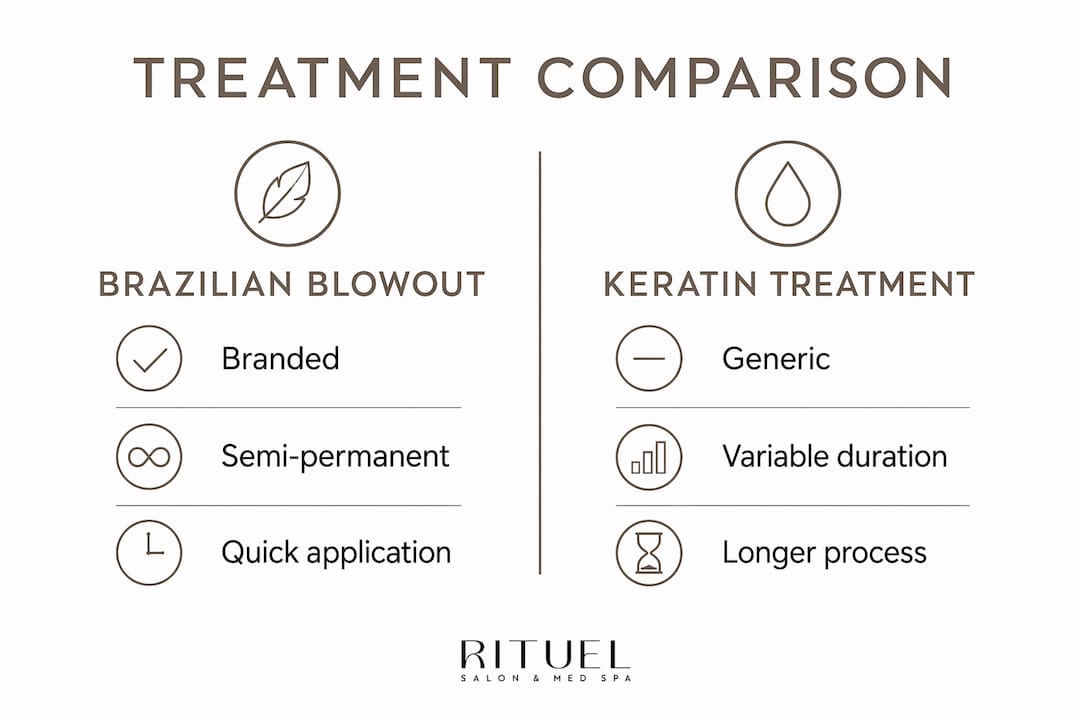
The terms "Brazilian blowout" and "keratin treatment" are often used interchangeably, but they are not the same thing. Understanding the distinction helps you choose the right service for your hair goals.
| Feature | Brazilian Blowout | Generic Keratin Treatment |
|---|---|---|
| Brand status | Branded, proprietary formula | Generic category, varies by brand |
| Straightening level | Customizable, preserves texture | Often more straightening-focused |
| Duration | 2 to 3 months | 3 to 6 months depending on formula |
| Post-treatment restrictions | Minimal, can wash hair same day | Often 3-day no-wash rule |
| Formaldehyde content | Varies by formula version | Varies widely by product |
Relaxers are a separate category entirely. A relaxer permanently alters the chemical bonds in your hair, changing its structure for good. A Brazilian blowout does not permanently change hair structure. It coats the outside of the strand rather than restructuring the interior, which is why it fades over time instead of growing out with a visible line of demarcation.
Generic keratin treatments vary widely in formula, application technique, and results. The Brazilian Blowout brand is a specific, proprietary product with a defined process, which gives certified stylists a consistent framework to work within. That consistency is part of what makes it a reliable choice when applied by a trained professional.
Pro Tip: Before booking any smoothing treatment, tell your stylist your actual goal. Do you want to eliminate frizz while keeping your waves? Or do you want noticeably straighter hair? That conversation determines which product and technique is right for you. Booking without that discussion is the most common reason clients leave disappointed.
Is a Brazilian blowout safe?
Safety is the most debated aspect of the Brazilian blowout treatment, and the concern is legitimate. Formaldehyde and methylene glycol are the chemicals at the center of the conversation. OSHA issued hazard alerts specifically for salon workers exposed to these compounds during application, citing risks of eye irritation, respiratory issues, and skin sensitivity.
The FDA has reviewed Brazilian blowout products, and some international markets have recalled certain formulas. The concern is not unfounded, but context matters. Here is what you need to know before your appointment:
- Formaldehyde levels vary by product. Newer formula versions contain significantly lower formaldehyde concentrations, and some certified salons use formulas marketed as formaldehyde-free.
- Ventilation is non-negotiable. The heat sealing step at 450°F releases chemical vapors. A well-ventilated salon is not optional. If the space feels stuffy or the smell is overwhelming, that is a red flag.
- Occupational risk is higher for stylists. OSHA warnings were directed primarily at salon workers who perform multiple treatments per day, not clients receiving a single treatment every few months.
- Ask about the specific product. Request the product name and check its safety data sheet before your appointment. A reputable salon will not hesitate to share this information.
- Sensitivity testing matters. If you have a history of chemical sensitivities, scalp conditions, or respiratory issues, discuss this with your stylist before committing to the treatment.
Choosing a certified stylist at a reputable salon is the single most effective way to reduce risk. Proper technique, appropriate product selection, and good ventilation together make the treatment far safer than a DIY approach or an uncertified provider.
What does a Brazilian blowout cost, and how do you maintain it?
The cost of a Brazilian blowout ranges from $95 to $400 depending on salon location, stylist experience, and hair length. In a major metro market like Phoenix, expect to pay toward the middle to upper end of that range for a certified professional. That price typically includes the full treatment from shampoo to final blow-dry.
Aftercare is where many clients lose their results early. The rules are straightforward, but they require consistency:
- Switch to a sulfate-free shampoo. Sulfates strip the keratin coating faster than anything else. Products like Pureology Strength Cure or Brazilian Blowout's own aftercare line are formulated to extend results.
- Wait 24 to 72 hours before washing. Even with formulas that allow same-day washing, giving the treatment time to fully set improves longevity.
- Avoid chlorine and saltwater. Both accelerate fading. If you swim regularly, wear a cap or rinse immediately after.
- Plan touch-ups at the two-month mark. Fading begins at the hairline and works inward gradually. Scheduling a touch-up before you notice significant reversion keeps your results looking intentional rather than grown out.
- Skip the DIY kits. At-home Brazilian blowout kits exist, but without professional-grade tools and technique, results are inconsistent and the chemical exposure risk is harder to manage safely.
If you live somewhere with high humidity or hard water, like many parts of Phoenix, your results may fade slightly faster. A frizz-fighting routine between appointments helps maintain the smoothing effect.
Pro Tip: Use a silk or satin pillowcase after your treatment. Cotton creates friction that roughens the cuticle overnight, which works against the smoothing effect you just paid for.
Key takeaways
A Brazilian blowout delivers lasting frizz control and shine through a keratin-based coating sealed with heat, with results that last two to three months and fade naturally without a harsh regrowth line.
| Point | Details |
|---|---|
| Definition and duration | A keratin-based smoothing treatment that lasts 2 to 3 months with gradual fading. |
| How it works | Keratin formula is applied and sealed at 450°F to form a protective layer around each strand. |
| Customizable results | Stylists adjust heat and technique to preserve waves or achieve a straighter finish. |
| Safety considerations | Ventilation, certified stylists, and verified product formulas reduce chemical exposure risk. |
| Aftercare priority | Sulfate-free shampoo and avoiding chlorine are the two most effective ways to extend results. |
What I have learned after years of smoothing treatments
Working in a luxury salon environment in Phoenix, I have seen the Brazilian blowout treatment transform hair for clients across every texture type. The results are real. But what I find most clients underestimate is how much the consultation matters before the treatment even starts.
The biggest misconception I encounter is that a Brazilian blowout means straight hair. It does not have to. Some of my favorite results are on clients with naturally curly or wavy hair who wanted definition and frizz control without losing their texture. That outcome is entirely achievable when the stylist understands the goal and adjusts the formula and heat accordingly.
I also want to be direct about safety: the chemical conversation is not something to dismiss. I always recommend that clients ask specifically which product formula the salon uses and whether the space has proper ventilation. A good stylist welcomes that question. If a salon seems evasive about product details, that tells you something important.
The clients who get the most out of this treatment are the ones who come in with clear expectations, follow the aftercare guidelines consistently, and schedule touch-ups before the results fully fade. It is not a set-it-and-forget-it treatment. It rewards a little attention. And when it is done well, it genuinely changes how you experience your hair every single morning.
— Victor
Experience a professional Brazilian blowout at Rituel Salon & Med Spa
If you are ready to move from researching to results, Rituel Salon & Med Spa in Phoenix offers professional Brazilian blowout treatments performed by certified stylists who understand how to customize the process for your specific hair type and goals.
Located at 4700 N 12th St, Suite 211 in Phoenix's central corridor, Rituel Salon & Med Spa provides a full range of hair care services including smoothing treatments, balayage, precision cuts, and extensions. Beyond the salon chair, the med spa side offers facials, microneedling, and IV therapy for clients who want to address beauty and wellness in one place. Book a consultation to discuss your hair goals and find out which smoothing treatment is the right fit for you.
FAQ
What is a Brazilian blowout, exactly?
A Brazilian blowout is a professional keratin-based smoothing treatment that coats hair strands with a protective layer sealed by heat to reduce frizz and enhance shine. Results last approximately two to three months and fade gradually without a harsh regrowth line.
How long does a Brazilian blowout appointment take?
Most appointments run between 90 minutes and two hours, depending on hair length and thickness. The process includes multiple shampoo passes, formula application, blow-drying, flat iron sealing, and a final conditioning rinse.
Can I wash my hair right after a Brazilian blowout?
Many modern Brazilian blowout formulas allow you to wash your hair the same day, but waiting 24 to 72 hours improves how well the treatment sets. Always use a sulfate-free shampoo after treatment to protect the keratin coating.
Is a Brazilian blowout the same as a keratin treatment?
No. Brazilian Blowout is a specific branded product with a defined application process, while "keratin treatment" is a broad category that includes many different formulas and techniques. The Brazilian Blowout brand is known for its customizability and minimal post-treatment restrictions.
How much does a Brazilian blowout cost?
Prices range from $95 to $400 depending on salon location, stylist experience, and hair length. In a market like Phoenix, most professional treatments fall in the mid-to-upper range of that scale.