

A med spa is defined as a hybrid facility that combines non-surgical aesthetic medical treatments with the relaxing atmosphere of a day spa, all under the supervision of a licensed healthcare professional. The industry term is "medical spa," though "med spa" is the widely used shorthand you'll see everywhere from Google searches to clinic signage. According to the American Med Spa Association, the U.S. now has over 10,000 medical spa locations generating more than $20 billion annually. That scale reflects a genuine shift in how people approach aesthetic care. Understanding what a med spa does, and what separates it from a traditional day spa, helps you make smarter decisions about your skin, your body, and your safety.
What is a med spa and what does it actually do?
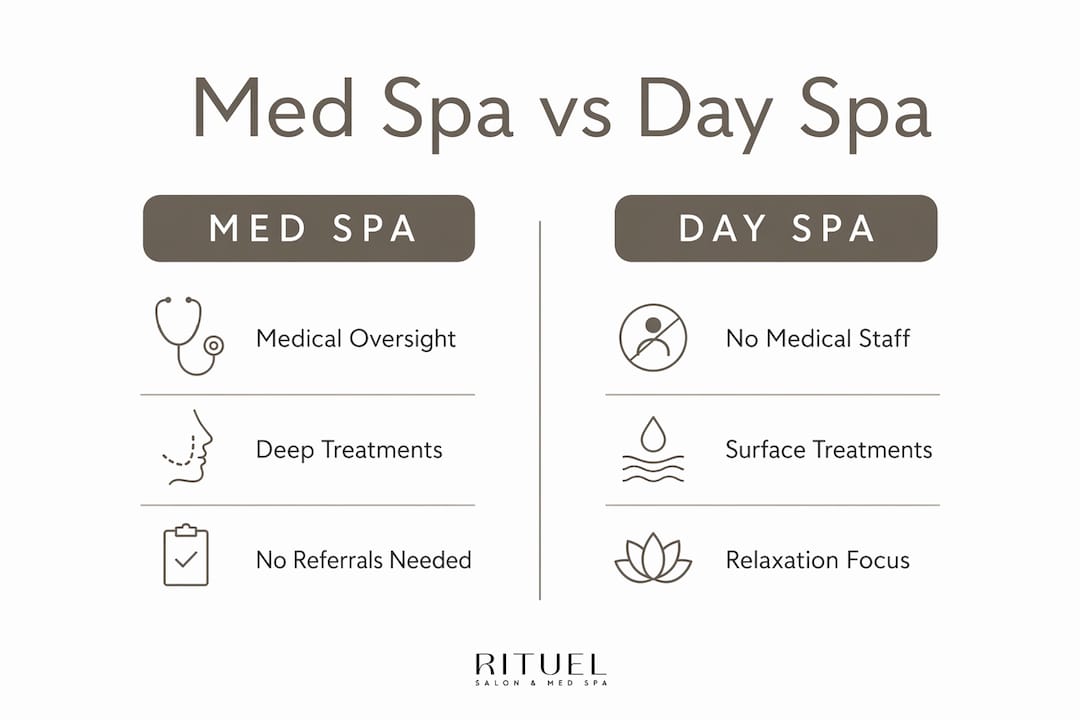
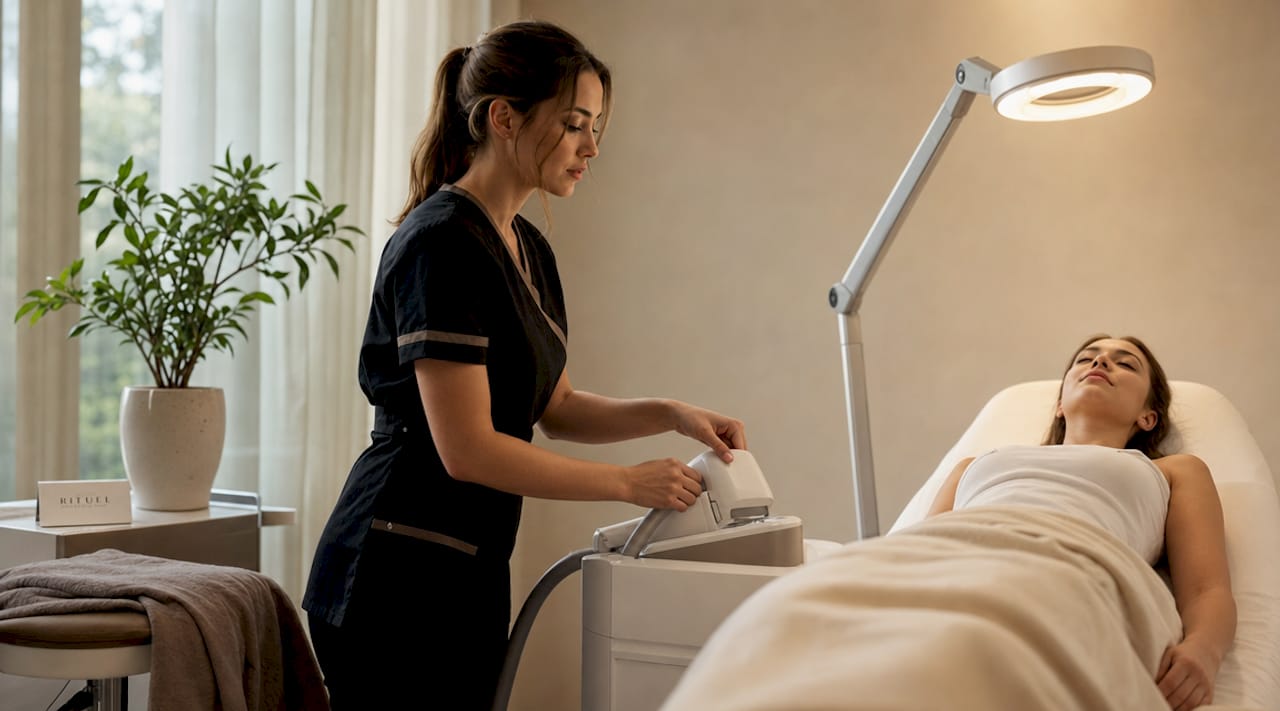
A medical spa delivers non-surgical cosmetic treatments that go beyond what a licensed esthetician can legally perform. The defining characteristic is medical oversight. A physician, nurse practitioner, or physician assistant must be involved in the care model, either on-site or through a supervisory structure, depending on state law.
The hybrid model appeals to patients who want clinical results without the recovery time or cost of surgery. You get access to treatments like Botox, laser resurfacing, and microneedling in an environment that feels more like a spa than a doctor's office. That combination of efficacy and comfort is the core value proposition of the medical spa model.
What separates a med spa from a dermatology clinic is the atmosphere and accessibility. Most med spas do not require referrals, do not bill insurance, and are designed to feel welcoming rather than clinical. That lower barrier to entry is part of the appeal, and part of why patient education matters so much before you book.
What med spa treatments and services are typically offered?
Medical-grade treatments at med spas affect living tissue beneath the skin surface. That is the technical line that separates them from traditional spa services, which stay at the skin's surface. The range of services varies by location, but most established med spas offer some combination of the following:
- Injectables: Botox (botulinum toxin), Dysport, and dermal fillers like Juvederm or Restylane to address fine lines, volume loss, and facial contouring
- Laser therapies: Laser hair removal, laser skin resurfacing, and intense pulsed light (IPL) treatments for pigmentation and texture
- Microneedling: Controlled micro-injuries to stimulate collagen production, often combined with PRP (platelet-rich plasma) or growth factor serums
- Chemical peels: Medical-strength acids applied to resurface skin, reduce hyperpigmentation, and improve tone
- Body contouring: Non-surgical fat reduction and skin tightening using technologies like CoolSculpting or radiofrequency devices
- IV therapy: Intravenous vitamin and hydration infusions for energy, recovery, and skin health
- Wellness services: At some locations, this extends to weight loss programs using medications like Semaglutide or Tirzepatide, hormone replacement therapy, and peptide therapy
The variation in services among different med spas is significant. A boutique med spa might specialize in injectables and facials, while a larger wellness-focused location like Rituel Salon & Med Spa in Phoenix offers everything from HydraFacials and microneedling to IV therapy and medical weight loss under one roof.
Pro Tip: Ask for a full treatment menu before your consultation. A reputable med spa will list every service, the technology used, and the credentials of the provider performing each treatment. If that information is hard to find, that tells you something important.
How do med spas differ from traditional day spas?
The difference between a med spa and a day spa comes down to three things: treatment depth, medical oversight, and legal classification. Understanding these distinctions helps you set the right expectations before you walk through the door.
| Feature | Med Spa | Day Spa |
|---|---|---|
| Treatment depth | Affects living tissue beneath the skin | Surface-level skin and relaxation treatments |
| Medical oversight | Licensed healthcare professional required | No medical supervision required |
| Services offered | Botox, fillers, lasers, microneedling, IV therapy | Massages, facials, manicures, body wraps |
| Legal classification | Regulated as a medical practice in most states | Regulated as a personal care service |
| Referral required | Typically no | No |
| Insurance coverage | Generally not covered | Generally not covered |
| Consultation process | Medical intake, treatment plan, informed consent | Service menu selection |
Day spas focus on relaxation and surface-level skin care. A licensed esthetician at a day spa can perform facials, exfoliation, and basic extractions, but cannot legally inject Botox, operate a medical-grade laser, or administer IV drips. Those services require medical licensure and clinical training.
The ambiance between the two can look similar. Both often feature soft lighting, calming music, and comfortable treatment rooms. The key distinction is what happens in those rooms. Med spa treatments carry real clinical risk, which is exactly why medical supervision is not optional.
Pro Tip: If a facility offers Botox or laser treatments but cannot clearly identify the supervising physician or nurse practitioner, treat that as a red flag. The spa environment does not change the medical nature of the services being performed.
What should you know about med spa supervision and safety?
Supervision is the most important safety factor in any medical spa, and it is also the area with the most variation across the industry. Only about 37% of med spas are owned by physicians, and 70% lack any physician affiliation. That statistic points to a real gap between the medical nature of the treatments and the medical credentials of the people overseeing them.
State regulations vary dramatically. Some states require a physician to be physically present on-site whenever medical procedures are performed. Others allow remote oversight, where a physician serves as a "medical director" but may never actually be in the building. The American Society for Dermatologic Surgery recommends on-site physician supervision as the standard that best protects patients from complications.
"Physicians performing initial patient assessments should develop treatment plans and obtain informed consent, ensuring procedures are medically appropriate and safe." — American Medical Association
Here is what you should verify before any med spa treatment:
- Who owns the practice? Physician ownership is the strongest indicator of medical accountability.
- Who performs the treatment? Nurses, physician assistants, and nurse practitioners can legally perform many procedures, but their credentials should be clearly displayed.
- Is the supervising physician available on-site? Remote medical directors cannot respond to complications in real time.
- What is the protocol if something goes wrong? A reputable med spa has a clear emergency response plan.
- Are you receiving a formal consultation? Medical treatment plans and informed consent are not formalities. They are patient protections.
The benefits of med spas are real, but they depend entirely on the quality of the medical team behind the services. A beautiful facility with unqualified providers is a liability, not a luxury.
How to choose the right med spa for your needs
Choosing a med spa is a medical decision, not just a lifestyle one. The American Society of Plastic Surgeons provides clear guidance on what patients should evaluate before committing to any provider. Follow these steps to protect yourself and get the results you're looking for.
- Verify physician involvement. Ask directly whether a physician owns the practice or serves as an on-site medical director. Understand the difference between the two.
- Check provider credentials. Every person performing a treatment should be licensed and trained specifically in that procedure. Ask to see credentials if they are not posted visibly.
- Review the treatment menu against your goals. A med spa that specializes in the treatments you want will deliver better outcomes than one that offers everything at a surface level.
- Assess the consultation process. A thorough intake, medical history review, and personalized treatment plan are signs of a medically sound operation. Avoid any facility that skips this step.
- Read verified reviews. Look for patterns in patient feedback, specifically around results, communication, and how the team handled any concerns.
- Ask about safety protocols. Hygiene standards, equipment maintenance, and emergency procedures should be easy to discuss with the staff.
- Understand the cost structure. Pricing should be transparent. Be cautious of unusually low prices on treatments like Botox or laser services, since quality and safety have real costs.
For Phoenix residents, a resource like the med spa selection guide from Rituel Salon & Med Spa walks through local-specific considerations, including what to expect from consultations and how to evaluate providers in the Phoenix market.
Pro Tip: Book a consultation before committing to any treatment. A good med spa will take time to understand your goals, review your health history, and explain exactly what a treatment involves. If the consultation feels rushed or generic, trust that instinct.
Key takeaways
A med spa delivers medical-grade, non-surgical aesthetic treatments under licensed healthcare supervision, and choosing one requires the same diligence you would apply to any medical provider.
| Point | Details |
|---|---|
| Definition | A med spa is a hybrid of a medical clinic and day spa offering non-surgical treatments. |
| Core services | Treatments include Botox, microneedling, chemical peels, laser therapy, and IV therapy. |
| Key difference from day spas | Med spa treatments affect living tissue and require licensed medical oversight. |
| Supervision matters | Only 37% of med spas are physician-owned; always verify who supervises your care. |
| How to choose | Verify credentials, confirm on-site physician access, and insist on a formal consultation. |
Victor's take on med spa safety and what most people overlook
The med spa industry has grown faster than the regulations designed to govern it. That is not a criticism of the industry as a whole. It is an observation about where the responsibility falls, and right now, a significant part of it falls on you as the patient.
Most people walk into a med spa the same way they walk into a nail salon. They look at the decor, read a few reviews, and book the service. That approach works fine for a blowout. It is not sufficient for Botox, laser resurfacing, or IV therapy. These are medical procedures performed in a spa setting, and the spa setting can create a false sense of low stakes.
What I have seen consistently is that the best outcomes come from med spas where the physician is genuinely involved in patient care, not just listed on a website as a medical director. When a licensed provider takes time to understand your skin history, your medications, and your realistic goals before touching you, the results are better and the risks are lower. That is not coincidence.
The question I always recommend asking is simple: "If I have a reaction or complication, who handles it and how quickly can they be here?" The answer tells you everything about how seriously a facility takes its medical responsibilities. A spa that hesitates on that question is not ready to take care of you.
The benefits of medically supervised aesthetic care are real and well-documented. You just have to find a provider who takes the "medical" part as seriously as the "spa" part.
— Victor
Experience medical-grade care at Rituel Salon & Med Spa in Phoenix
Rituel Salon & Med Spa in Phoenix brings together licensed medical professionals and a warm, luxury environment at 4700 N 12th St, Suite 211. The med spa side of Rituel offers HydraFacials and DiamondGlow facials, microneedling for collagen and texture, Botox and Dysport injectables, chemical peels, and IV therapy, all performed by credentialed providers under physician oversight.
Every new patient at Rituel receives a personalized consultation before any treatment begins. The team reviews your goals, your health history, and the right treatment plan for your skin and body. If you are ready to explore what medical-grade aesthetic care looks like in a setting that actually feels good to be in, book your consultation at Rituel Salon & Med Spa today.
FAQ
What is a med spa in simple terms?
A med spa is a facility that offers non-surgical cosmetic treatments, like Botox, laser therapy, and microneedling, in a spa-like environment under the supervision of a licensed healthcare professional. It combines the clinical results of a medical practice with the comfort and accessibility of a day spa.
What is the difference between a med spa and a regular spa?
Med spas perform treatments that affect living tissue beneath the skin and require medical oversight, while regular day spas focus on surface-level services like massages and basic facials. The legal classification, provider credentials, and treatment depth are all distinct.
Are med spa treatments safe?
Med spa treatments are safe when performed by properly trained, licensed providers under qualified medical supervision. Patient safety risks increase significantly at facilities without on-site physician oversight or clear provider credentials.
Do you need a doctor's referral to visit a med spa?
Most med spas do not require a referral and do not accept insurance. You can book directly, though a reputable facility will conduct a medical intake and consultation before performing any treatment.
What questions should I ask before choosing a med spa?
Ask who owns the practice, who will perform your treatment and what their credentials are, whether a physician is available on-site, and what the protocol is if a complication occurs. The American Society of Plastic Surgeons recommends verifying all of these points before committing to any provider.